

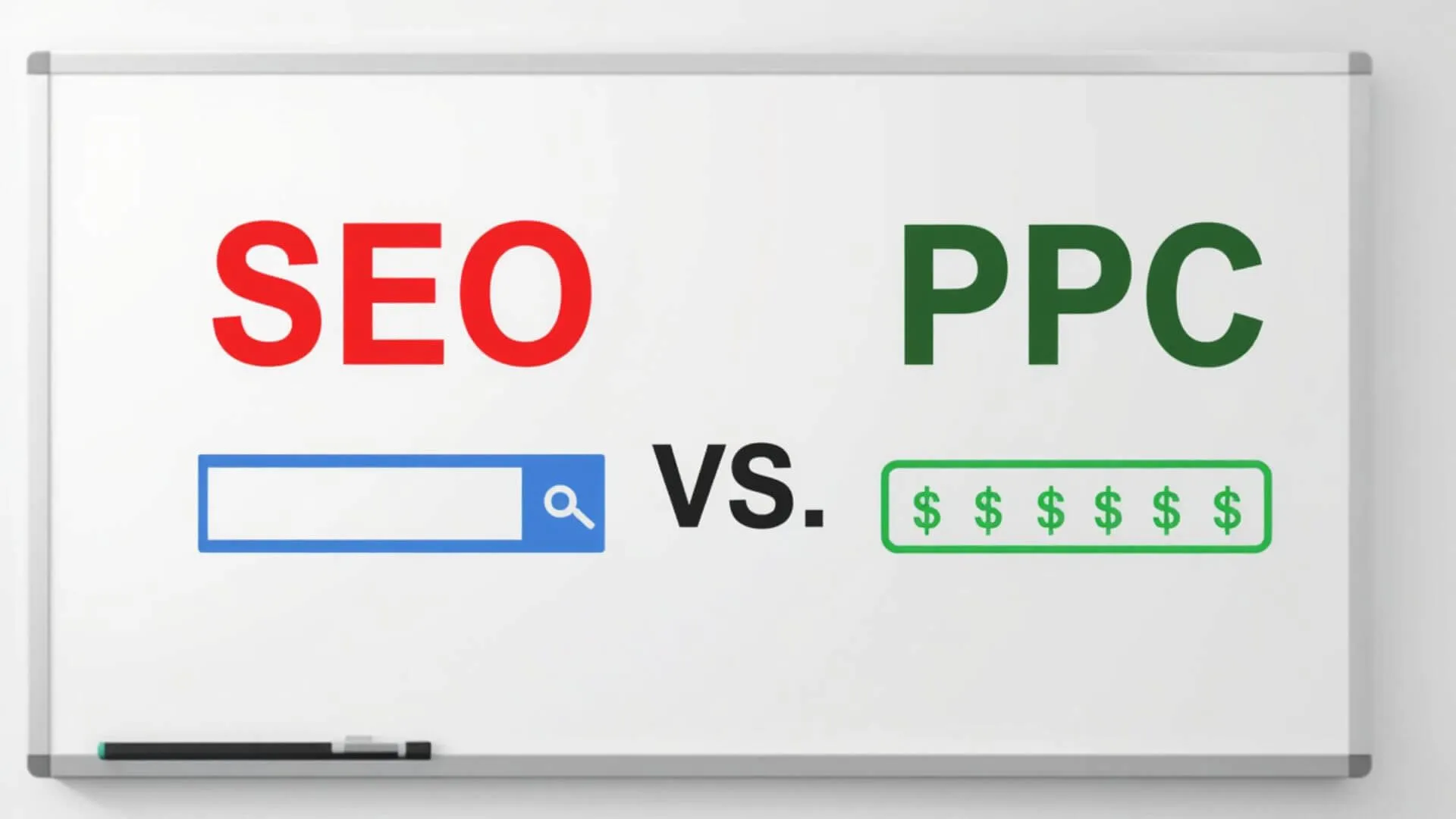
If you’ve ever tried to build a business online, you have likely run into this debate again and again: SEO vs PPC, which is better? At first glance, it feels like a simple choice. people act like it’s a battle, this “either-or” choice you have to make. Honestly, if you listen to marketers, it sounds as if SEO and PPC are always fighting for your money and your best shot at growth. Some founders get loud about it in meetings. Agencies pitch one or the other as “the only way.” And for business owners? You’re left wondering whether picking the wrong option means losing both time and money while the SEO vs PPC debate continues.
But let’s drop the idea that it’s simple. It’s not. For any business owner or marketer, when you ask, “Which is better between SEO and PPC for business growth?” you’re really wrestling with bigger questions:
- Do I need fast results?
- Am I building long-term, or do I need sales today?
- How do I stretch my budget to get quality leads?
It influences everything from how you spend money to how you interact with people online, and it’s not just technical but a strategy tied closely to the SEO vs PPC decision.
I prefer to think of it as similar to the difference between renting a luxury apartment and building a house. Building is an investment in something durable. It’s an upfront effort, but it pays you back in stability. Renting gets you instant access and a quick setup, but once you stop paying, you move out. The issue is: What does your company actually require at this moment? There is no right or wrong answer. To understand which is better between SEO and PPC for your specific business growth, we must look at how both mechanisms fit into your growth strategy.
What is SEO?
At its core, Search Engine Optimization (SEO) is the art and science of earning your place at the top of organic search results. It is a “human-centered” approach to growth that focuses on proving to search engines like Google that your site is the best answer to a user’s query out there, authoritative, relevant, and safe. It is the process of improving your website so that it appears in search engine results when people search for relevant keywords. You’re making your site worthwhile for humans and for algorithms.
Every day, people go online thinking, “What’s the best laptop for designers?” or “Affordable marketing agencies in Kenya.” When they look, SEO determines who they see first. If you win at SEO, you’re the answer, not just an option, which is why it plays such a strong role in the SEO vs PPC conversation.
SEO isn’t just about showing up. It’s showing up better than anyone else. And search engines? They are wild about delivering trustworthy, useful results. So SEO is really about proving to search engines that your website deserves to be seen first.
The Three Pillars of SEO
Adding keywords to your website is only one aspect of SEO. It basically comes down to designing your whole online presence and making sure that everything works together to provide visitors and search engines the greatest experience possible. When deciding which is better between SEO and PPC, remember that SEO relies on three pillars. Each of these pillars has a specific function, but all of which work together to increase your exposure.
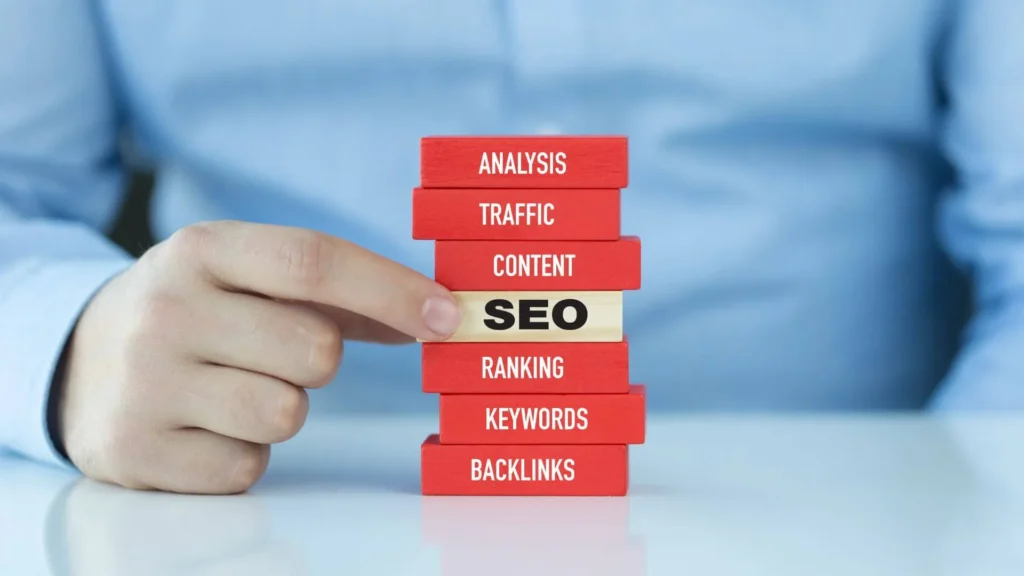
- Technical SEO
Consider it the intricate details that go on behind the scenes. Speed, mobile optimization, clear site architecture, simple navigation, fixing broken links, and correcting mistakes are all basic off-page SEO. No matter how great your content is, search engines won’t bother promoting your website if it loads slowly or feels like a maze. Technical SEO ensures that Google can correctly index everything, comprehend your structure, and crawl your pages with ease. To be honest, everything else falls apart if you disregard this.
- On-Page SEO
This one is all about what people actually see and engage with—the headlines, the content, and the way you respond to their inquiries. There is more to it than just including keywords. Whether it’s a solution to a problem or an easy-to-understand explanation of something complex, you must create content that genuinely helps someone. Because search engines analyze titles, meta descriptions, and alt text to determine the true purpose of your page, these elements are also important. Making everything readable and interesting, however, is the true secret. People want clarity and utility; they can tell when you’re merely pushing buzzwords.
- Off-Page SEO
This is the point at which your reputation matters. Search engines are alerted to your legitimacy, authority, and trustworthiness when other websites share your material, link to you, or mention your brand. It resembles receiving recommendations. Your chances of rising in the ranks increase with the number of reputable websites that endorse you. It also has to do with how prominent and “talked about” you are online, even if backlinks are the main focus.
The fact that SEO pays off long after you’ve invested is what makes it so unique. Your efforts will continue to provide rewards, possibly for years, if you put in the time to write a great blog article or make technical adjustments. One of the few tactics that creates ground-up development is SEO. You receive continuous, organic traffic without having to pay for advertisements. Additionally, such traffic seems more beneficial and is more likely to result in conversions because you are reaching them while they are actively shopping for a certain product.
Therefore, SEO is the engine that stays running and compounding over time, offering actual value precisely when people are ready to see it. This long-term compounding is one of the biggest reasons people lean toward SEO in the SEO vs PPC conversation.
Advantages of SEO
- Long-Term Traffic: The traffic just continues flowing once you get those higher ranks. The visitors continue to increase over time, even if you cease actively working on SEO.
- Reduced Cost of Customer Acquisition: Unlike advertisements, SEO does not require you to pay for each click. Yes, you work more up front, but in the long run, your content carries its own weight, and expenses remain minimal.
- Increases Credibility and Trust: Compared to sponsored advertisements, people are far more likely to trust organic search results. It seems right to land at the top because it is. It demonstrates that you deserve your position.
- High-Intent Visitors: These people are genuinely looking for what you have to offer; these aren’t just random clicks. There’s no need to pursue them with obtrusive banners or popups. You provided the answers they sought, which is why they are here.
- Sustainable Business Growth: SEO isn’t some shortcut for quick wins. It’s about establishing a lasting presence that pays dividends, month after month.
- Competitive Advantage: Many businesses still ignore or don’t really work on SEO. You can outperform rivals and create a brand that consumers remember if you put your all into it.
- Operates Throughout the Whole Customer Journey: SEO facilitates connections at all phases, including early discovery, research, comparative shopping, and, ultimately, purchase.
SEO takes patience and effort. But when it starts working, it becomes one of your biggest business assets.
What is PPC Advertising?
PPC means Pay Per Click. In short, you pay each time someone clicks your ad. It’s a direct lane to your site; you buy visits instead of waiting for organic ones. So, how does it work?
You pick keywords linked to your business. For instance, maybe you sell sneakers, you aim for phrases like “buy sneakers online” or “cheap sneakers London.” You create an ad, set your budget, and bid through platforms like Google Ads. When someone searches your keywords, your ad appears right at the top, often above organic results.
PPC also exists across social media (like Facebook or Instagram ads). However, in this SEO vs PPC debate, we are focusing on search engine PPC (like Google Ads/Microsoft Ads). This is because search-based ads are the ones that fight for the same spot as your organic search listings.
Why Do Marketers Rave about PPC?
It’s the accelerator of digital marketing. If SEO is a marathon runner, PPC is the sprinter. Here is what makes it so effective.
- Instant Visibility: Your campaign goes live, and you’re showing up where it matters. No waiting months.
- Pinpoint Targeting: You can choose exactly who sees your ad, from age to interests to location. It’s surgical.
- Budget Control: You set your daily cap, limit per-click costs, and pause or adjust instantly. No surprises.
- Clear Analytics: PPC hands you the data, how many saw your ad, clicked, converted. You know what’s working, fast.
- Quick Testing: Got a new product, offer, or message? Run a test campaign, see results instantly. No sitting around hoping for slow organic feedback.
PPC is fast. It is direct. And it is measurable. But there’s a catch: PPC needs constant funding. The moment your budget stops, so does your traffic, which is a key factor when deciding SEO vs PPC, which is better for your business.
Key Differences Between SEO and PPC
To settle the “SEO vs PPC Which is Better?” debate, we have to look at how they perform across different business metrics.
SEO: Slow to start (3-6 months to solid results), bigger upfront effort, but traffic is “free” once you rank. It lasts, and content works for months or years after creation. People trust organic rankings more. But you don’t handpick keywords; Google’s algorithm chooses based on your authority and relevance. Scaling takes time, and click-through rates often shine for informational searches.
PPC: Immediate results, ads can show up within minutes. You pay for every click, and as traffic grows, so do your costs. Pause your campaign, and traffic stops instantly. Some people skip ads, but killer copy still converts. You control everything: keyword, budget, audience. Scaling is a breeze; just add money. Higher click rates for commercial intent searches, but zero longevity after you stop paying.
Here is a simple side-by-side comparison to make things clear and help you see which is better between SEO and PPC:
| Feature | Search Engine Optimization (SEO) | Pay Per Click (PPC) |
| Speed | Slow and steady. Can take 3 to 6 months or more to see strong results. | Instant visibility. Ads can go live and start driving traffic within minutes. |
| Cost Structure | High upfront investment in content, strategy, and optimization. Traffic becomes “free” over time. | You pay for every click. Costs increase as traffic increases. No spend means no traffic. |
| Sustainability | Long term. Content and rankings can keep bringing traffic for months or years. | Short term. Traffic stops immediately when you stop paying. |
| Trust Factor | High trust. Users often see organic results as more credible and authoritative. | Moderate trust. Some users skip ads, but strong copy can still convert well. |
| Control | Limited control. Search engines decide rankings based on algorithms. | Full control. You choose keywords, budget, audience, and messaging. |
| Scalability | Slower to scale. Requires more content and authority building. | Fast to scale. Increase the budget and reach more people instantly. |
| Click Through Rate | Often higher for informational searches. Users prefer organic answers. | Higher for commercial intent searches when users are ready to buy. |
| Longevity | Content keeps working even after you stop actively optimizing. | Stops working the moment you pause your campaigns. |
Now, let us break down the most important differences in a way that impacts your business decisions.
1. The Cost of Entry vs. The Cost of Maintenance
When weighing which is better between SEO and PPC, consider the cost of entry. This is where most businesses feel the biggest difference. With SEO, your primary investment is time and expertise. Whether you write the content yourself or hire a specialist, you are building an asset. Once you rank for a keyword like “social media marketing strategy” or “best ecommerce platform,” you do not pay each time someone clicks your link. Whether you get 10 visitors or 10,000 visitors, your cost does not increase.
Pay Per Click advertising has a completely different model. You are paying for access. Every click has a cost attached to it. If a keyword costs $0.5 per click and 100 people click your ad, you pay $50. If 1,000 people click, you pay $500. The advantage is speed. You can get traffic immediately. But the downside is clear: your Customer Acquisition Cost is directly tied to your budget. The moment you stop spending, your traffic disappears.
2. Better Positioning
In search results, visibility is everything. PPC ads dominate the top of the page. This is called above the fold, meaning it is what users see before they even scroll. For high-intent keywords like “build a WordPress website” or “hire an SEO agency,” ads can take up most of that first screen, especially on mobile devices. This gives PPC a major advantage. You are immediately visible to people who are ready to take action.
However, there is another side to this. Many users have become more aware of ads. They notice the “Sponsored” label and intentionally scroll past it to find organic results. They believe organic listings are more trustworthy because they were earned, not paid for. This is where SEO wins in SEO vs PPC.
Ranking organically positions your business as credible and authoritative. It signals that your website is valuable enough for search engines to recommend it without payment. So while PPC gives you premium placement, SEO gives you credibility. The smartest strategy is to understand how both influence user behavior.
When to Use SEO
SEO is ideal if you’re thinking long term. If you want to make your business not just visible but respected and remembered, SEO is your backbone.
- Building a brand for the long haul? You need organic authority.
- Want to lower customer acquisition cost over time? SEO is your answer.
- Targeting informational or educational searches? SEO fits like a glove.
- Want to signal you “earned” your spot, not bought it? SEO gives you that credibility.
When to Use PPC
PPC is not just a quick fix but a precision tool. It is the better choice when:
- Launching a new product? You need eyeballs, now.
- Running a time-sensitive promo? SEO won’t be fast enough. PPC lets you open the market and close it at will.
- Targeting hyper-competitive keywords? PPC cuts forward.
- Need to reach a super-specific group? PPC’s targeting is precise.
Making the Right Choice for Your Business
So, which is better between SEO and PPC?
The most successful businesses realize that this is a false dichotomy. The real growth happens in the synergy between the two. Instead of obsessing over SEO vs PPC, which is better, the smarter move is understanding when and how to use each.
If you just launched your business, you need clients ASAP, not in six months. Pay Per Click gives you leads right now. But you also lay down SEO foundations, creating valuable content, optimizing your site, and choosing strong keywords. Over time, organic traffic from SEO starts coming in. Now you can dial back ad spend on those keywords and redirect the budget as you grow.
Instead of wasting money testing blindly, let us show you exactly what will work for your business. Schedule a consultation to identify your flaws, point out your potential, and advise you on whether PPC, SEO, or a combination would provide faster results. We’ll map out a growth plan built for your goals.
Because here’s the real question: Your customers are already searching. Are they finding you, or just your competitor?
