

These days, if you’re running a brand and you don’t have a real social media marketing strategy, you’re already behind. Social media is how people find you, talk about you, and decide if you’re worth their time (and money). Brands that treat social media like a side project get side project results. Random posting doesn’t cut it. Yet, the ones who map out a real social media marketing strategy create measurable momentum. Strategy transforms content into conversion, attention into authority, and followers into loyal customers.
The internet is packed and algorithm-driven, not to mention AI. But algorithms will always support relevant brands, show up consistently, and get people talking. No plan makes you end up burning money, confusing your audience, and keeps you struggling to grow. A clear social media strategy makes everything click. You know what to say, when to say it, and you can actually track if it’s working.
But a strategy isn’t a fancy word for “plan.” It actually needs structure. A good strategy breaks big goals into real steps you can actually take. By doing so, you can ensure that each post, advertisement, and comment works toward a greater goal. Rather than following every new trend, a social media strategy enables you to act purposefully. Here, we’ll walk you through a seven-step framework for creating a social media marketing strategy.
What is A Social Media Marketing Strategy Roadmap
A social media marketing strategy roadmap is your brand’s blueprint for doing social right. It’s the process of moving from sporadic posting to genuinely creating a successful online presence. This plan outlines how you will leverage each platform to achieve your business objectives. This might be establishing a genuine community, generating new leads, or promoting your brand. It covers all the major turning points, such as determining your audience’s true demographics, selecting the appropriate platforms, and developing content pillars that direct your posts. The idea? Instead of merely filling your feed, every video, tweet, or piece of content should help you get closer to your larger objectives.
In reality, this roadmap becomes your team’s go-to manual and serves as a “single source of truth” for marketing teams. Everyone is in agreement, and innovative work aligns with what the data indicates is effective. It covers the specifics, such as how frequently to publish, how you’ll respond to messages and comments, and what metrics you’ll monitor to determine whether it’s all worthwhile. Additionally, your path is not set in stone because social media is always evolving. Because of its adaptability, you can maintain an eye on the broad picture while reviewing what’s working and changing your strategy as audience habits or algorithms change.
Why Is A Social Media Marketing Strategy Roadmap Important?
A social media roadmap is a link between vision and execution. Without a map, it’s simple to become sidetracked by the next trend, which can result in a disjointed brand identity and wasted time. Here is why it matters.
1. It Eliminates Decision Fatigue
Every day can quickly become a scramble. What should I post today? Is this appropriate for Instagram or LinkedIn? You eliminate the guesswork with a roadmap. A documented strategy makes your daily tasks become a matter of execution rather than creation-on-the-fly. Proactive campaigning replaces reactive posting.
2. It Aligns Effort with ROI
Social media is a notorious time-waster. Editing videos or tweaking captions doesn’t matter unless they help you hit your goals. A roadmap compels you to link each task to a business goal. This might be increasing brand authority, generating emails, or increasing visitors. It prevents you from performing “work” that doesn’t genuinely advance your company.
3. It Provides Consistency
With the algorithm, consistency is what gives you good standing. This includes maintaining a consistent voice, updating frequently, and ensuring that your brand appears and feels the same across all platforms. A roadmap helps you stay on course. It lets your audience know what to anticipate. That gradually fosters trust, and trust is crucial.
4. It Makes Pivoting Data-Driven
A failure seems like a catastrophe when you don’t have a strategy. However, it’s only feedback when using a roadmap. In fact, you may examine the data, determine where things went wrong, and modify your strategy without completely changing it. It helps pivots feel less anxious.
5. Agility in a Fast-Moving Market
Social media is always evolving. When a new app comes out, people start using TikTok instead of Google to get answers. An excellent roadmap is adaptable. You may include fresh ideas in your strategy without losing focus on what really counts. It keeps you prepared for whatever comes next.
6. Humanizing the Brand
People are tired of robotic content and AI. You may plan genuine, human moments, like providing consumer feedback or behind-the-scenes anecdotes, with a roadmap. The key to converting followers into fans is demonstrating to your audience that the brand is owned by actual people.
Seven-Stage Social Media Marketing Strategy Roadmap
This 7-stage marketing roadmap isn’t theory but a methodical playbook that combines the intricacies of marketing with imaginative storytelling. The significance of brand positioning, audience comprehension, platform functionality, and outcome tracking will all be covered. Everyone is vying for attention, so this roadmap has been designed to assist serious startups, growing brands, and existing businesses to stand out and compete. Each stage builds on the last, so at the end, you get a roadmap that gives you a memorable brand and an ROI you can actually measure.
Define Business Objectives and Success Metrics
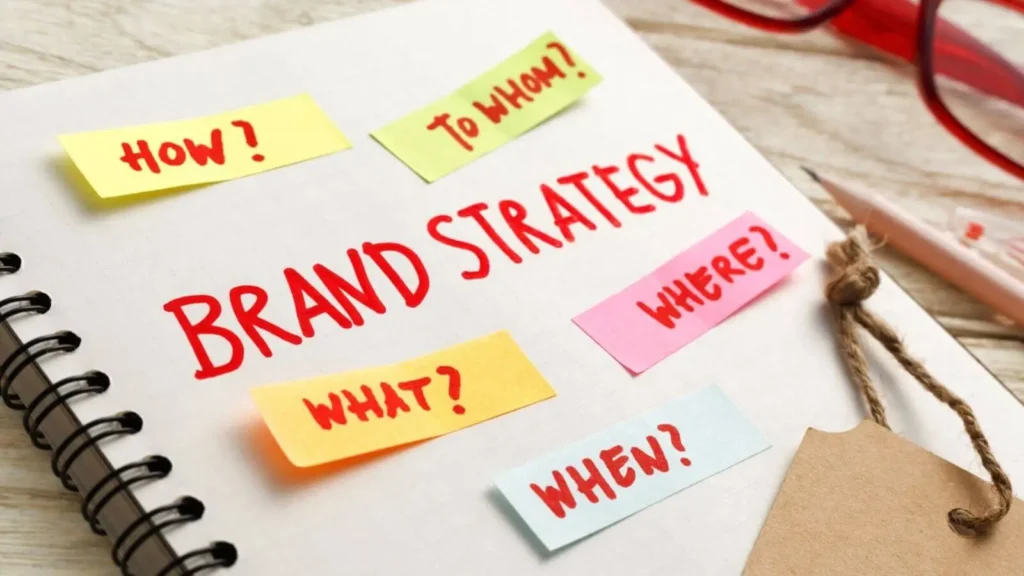
Before you do anything else, you must get clear on what you want. Without aim, social media is merely a loudspeaker yelling into a void. Don’t just start posting and hope for the best. Consider whether your goal is to increase sales, create a community, attract new leads, or just get your brand out there. Everything is shaped by your response. It directs your posting, where you publish, and how you determine whether it’s effective. We apply the SMART framework to transform these larger objectives into a workable plan.
With SMART goals, you shift from “growing the brand”, which is a feeling rather than a goal, to “increasing brand mentions by 15%,” which is a need. Your team becomes more focused and has a genuine sense of urgency when your goals are Specific, Measurable, Achievable, Relevant, and Time-bound.
The SMART Framework for Social Media
- Specific: Instead of “get more followers.”Instead, try “add 500 new tech followers on LinkedIn.” That’s specific.
- Measurable: A goal isn’t legitimate if it’s not visible on your analytics dashboard. Pay attention to metrics that you can monitor, such as shares or click-through rate.
- Achievable: Finding balance is key to achieving this goal. Push your team, but maintain realism. With a limited budget, are you aiming for a million views on your first reel? That’s just setting yourself up for failure; it’s not ambitious.
- Relevant: Your company objectives must align with your social aspirations. A million likes on a meme that has nothing to do with your product is not a victory if your objective is sales.
- Time-bound: To provide a window for assessment, each objective must have a “expiration date” (for example, by the end of Q3).
Metrics are important, but only if they relate to your goals. Monitor customer lifetime value, cost per acquisition, clicks, engagement, and reach. These aren’t “vanity metrics” if you use them right; they tell you what’s working in your funnel.
In order to go forward, take a step back before you set your goals. To establish wise standards, review your historical data or have a look at what your rivals are doing. It seems logical to raise your target to 2.5% if your engagement rate is now at 2%. Aiming for 10%? Unless you’re planning a major budget increase, that’s just wishful thinking. When you define these metrics from the start, you stop guessing and start running a real experiment. Every bit of data helps you fine-tune where to spend your time and money. You’re not just posting, but you’re building something that works.
Conduct Audience Intelligence and Market Research
You can’t connect with everyone, and if you try, you end up connecting with no one. The best strategies start with deep audience intelligence. Figure out who your people are. Learn about their age, hobbies, routines, and priorities. You must understand why people purchase, what stops them from scrolling, and what content they enjoy.
Find out what matters to them. Figure out what kind of content makes them stop scrolling. Social listening tools help here. Track what people are saying about you and your rivals using Brandwatch, Talkwalker, Sprout Social, or Brand24 to identify any patterns or holes that need to be filled. To find out how your competitors are doing and where you may differentiate yourself, combine those with analytics tools such as Google Analytics 4, Rival IQ, or Socialinsider. The greatest chances can occasionally be found when no one is looking. Your strategy should help you break through, not just blend in.
Turn all that research into real buyer personas, actual profiles of who you’re trying to reach. These guide your tone, your message, and which platforms you focus on. When you get what your audience struggles with and what motivates them, your content hits home. Audience clarity improves engagement quality, not quantity. That’s how you get better engagement and real results without wasting money on guesswork.
Build Brand Positioning and Messaging Architecture
Brand positioning matters too. It shapes the way people see you in a crowded feed. If you want to stand out, your social media strategy needs a clear, simple story: the right voice, a visual identity that fits, core messaging, and a strong value proposition. Stay consistent. People start to recognize you, and with recognition comes trust.
Messaging architecture is really just having a plan for what you say and how you say it. Are you teaching something? Promoting? Building a community? Giving your take on things? Laying it all out keeps your feed from feeling random or repetitive. A good strategy mixes storytelling with selling. Push too hard, and people tune you out. Don’t push enough, and you miss results.
Visual branding also plays a strategic role. Colour psychology, typography, and layout style influence emotional responses. When your visuals match your message, your brand feels authentic and professional. People start connecting your content with authority and expertise. Suddenly, social media isn’t just a place to post. It’s where your brand lives and grows.
Select Platforms and Optimize Profiles
Not every platform fits every brand. You need to go where your audience hangs out and where your goals make sense. B2B brands? LinkedIn is your place for credibility and leads. Got a visual story? Instagram is where you shine and build community. Want viral reach? TikTok is probably your best bet.
Each platform works differently. Each has its own algorithms, formats, and ways of spreading content. Understanding these technical nuances improves organic distribution. Profile optimisation is equally critical. Your profile should make it instantly clear who you are and why people should care. Use keywords. Add a strong call to action. Make sure your images match your brand identity.
A smart social media strategy ties everything together. Cross-channel promotion helps, but don’t copy and paste. Build native content for each space so it feels right to the audience. When you get this right, you turn casual views into real connections.
Develop a Content Strategy and Editorial Calendar
Content drives everything. If you don’t have a content plan, your posts get messy, and you lose consistency fast. A good strategy spells out what you’ll talk about, how you’ll share it, how often, and what kind of stories you’ll tell. The trick? Match what you post to where your audience is in their journey. So, for people just finding you, use educational videos or memes to grab attention. Once they’re interested, share case studies or webinars to build trust. When they’re almost ready to buy, things like testimonials or limited-time deals help seal the deal.
Types of Content Strategies
Use a variety of strategic methods to maintain the balance of your feed:
- Education-Based: Resolving audience problems to establish your brand as an authority in the field.
- Community-Led: Emphasizing interactive polls and User-Generated Content (UGC) to foster loyalty.
- Entertainment-First: Increasing viral reach using comedy, trends, and exciting narrative.
- Promotional/Direct Response: Clear calls-to-action (CTAs) designed to move users into your sales funnel.
Building the Editorial Calendar
What separates “What do I post today?!” from “I’ve got this” is the “Editorial Calendar.” A superb calendar not only records the date but also captures the essence of the post:
- Your Content Pillars: Your go-to topics are your content pillars. To avoid repeating yourself, rotate them.
- The Right Formats: A LinkedIn post may require a different “vibe” than a narrative that works as a fast TikTok. Select the format that best suits the tone of the platform.
- The Hook: Before someone scrolls by, you have around three seconds. Make sure that your initial visual frame or opening statement serves as the thumb-stopper.
- Ownership: Keep track of who is doing what by using your calendar. Who is filming? Who is the caption writer? The final approval is up to whom?
An editorial calendar brings operational discipline. Having this calendar is a game-changer. You are fully aware of what is planned, who is working on it, and when it must go online. All of a sudden, you’re managing clever campaigns rather than haphazard ones, which translates to higher quality and significantly less stress. Initiatives for both sponsored and organic content must be included in a social media marketing plan roadmap. High-performing pieces are certain to reach larger audiences through strategic amplification.
Mix up your formats to increase algorithm favorability. User-generated content fosters trust, carousels promote engagement, and videos capture viewers’ interest. Continue experimenting with fresh concepts. Experiment with different hooks, photos, and headlines. You will experience genuine, scalable progress if you persevere and keep becoming better.
Implement Paid Media and Performance Marketing
Organic reach isn’t what it used to be. Paid media matters now. Performance marketing lets you target exactly who you want, retarget people who’ve shown interest, and find new audiences that look like your best customers. This sharpens your campaigns and improves return on ad spend.
Your ads should match your goals. Want to get noticed? Focus on reach. Ready for sales? Zero in on conversions and cost per acquisition. Keep testing your messaging and creative to see what actually works. A social media marketing strategy roadmap integrates A/B testing to refine messaging and creative assets. Continuous optimisation improves click-through rates and lowers cost metrics. The more you optimise, the better your results.
Tracking matters. Use pixels and conversion APIs to really see what people do after clicking. Retarget those who already know you; they’re much more likely to take action. When you get strategic about paid media, it doesn’t eat into your budget. It builds momentum and turns your social media spend into a real investment.

Measure, Analyse, and Keep Improving
Analytics transform strategy into science. If you’re serious about marketing, you can’t set a strategy and walk away. Every social media marketing strategy must include continuous performance evaluation. Analytics dashboards show you what’s working right now. They tell you who’s engaging, how far your posts are reaching, and whether you’re actually growing your audience. If you want to dig deeper, third-party tools lay everything out. They give detailed cross-channel trends, detailed reports, you name it.
Data interpretation requires context. You could get tons of likes but hardly any sales. That usually means your message isn’t hitting home. Or let’s say your reach looks great, but people aren’t sticking around. Time to rethink your content hooks. The point is, you can’t glance at the data and move on. Use those insights to tweak your content, sharpen your targeting, and move your budget where it matters most.
Monthly and quarterly reports keep you on track and highlight where you’re winning or where you’re missing the mark. Comparing results against benchmarks reveals growth patterns and performance gaps. Measuring and optimising isn’t a single task but a habit. Brands that live by the numbers always outpace those that “go with their gut.” Constant improvement keeps you ahead.
Bringing the Roadmap into the Big Picture
This social media marketing roadmap isn’t something you print out and forget. It shifts as platforms change, as your audience evolves, and as trends pop up. New algorithms, new formats mean you’ve got to stay on your toes. The brands that are agile and adapt keep their followers and stay visible.
What actually keeps you growing? Consistency and being real. People spot fake or lazy brands a mile away. A good strategy brings everything together. It ties your goals, your audience, your message, your platforms, and content together. Also, it merges ads and your analytics. Each part supports the next, and that cycle pushes you forward. If you follow the roadmap, you stop posting inconsistently and start building something that actually works.
And you can’t do this alone. You need your marketing team, your creatives, and your data analysts all pulling in the same direction. If everyone’s in their own bubble, things fall apart. Social media works best when it’s tied into your bigger digital plan: SEO, email, and content marketing. Social media should amplify the brand strategy, not operate alone.
Social media wins don’t fall into your lap. You build them with research, creativity, testing, and constant tweaks. A deliberate social media marketing strategy positions your brand in front, builds trust, and drives sales. If you stick to a clear plan, your social channels turn into real business assets, not unpredictable experiments.
Ready to stop posting randomly and start building with direction?
Too many companies produce unstructured content in the hopes that it will be memorable. Get a thorough, useful feedback report in as little as 48 hours by scheduling a free audit with us now. You can decide to get onboarded immediately if you’re prepared to quit speculating and begin developing. After that, we create a useful marketing strategy that outlines exactly what you should say, to whom, and how to get them to take action.
